Schedule a Facility Tour
Want to see our operation in person? We welcome visitors.
Facility Areas
Our operation is organized into specialized zones, each designed to handle a specific stage of the pallet lifecycle — from intake and sorting through repair, treatment, and final delivery.
Sorting Yard
Our 20,000 sq ft open-air sorting yard is where incoming pallets are categorized by size, type, and condition. Skilled yard associates evaluate each pallet within seconds, separating repairable units from those destined for dismantling. Gravity-fed roller conveyors move pallets through three sorting lanes, and overhead lighting allows operations to continue into the evening hours during peak season. Capacity: 50,000 pallets at any given time.
Repair Workshop
A covered 5,000 sq ft workshop equipped with pneumatic nail guns, board saws, and a team of skilled repair technicians. Each station is outfitted with compressed air lines, replacement board racks, and ergonomic work surfaces designed to reduce repetitive-strain injuries. We repair 2,000+ pallets per day across twelve individual repair bays, and our technicians follow standardized repair protocols to ensure every pallet meets or exceeds grade specifications before returning to inventory.
Heat Treatment Kiln
Our ISPM-15 certified kiln processes 400 pallets per cycle, with a full turnaround time of approximately six hours including loading, heating, core temperature hold, and cool-down. The kiln is gas-fired and monitored by electronic temperature probes embedded in test blocks to guarantee that every load reaches the required 56 degrees Celsius core temperature for a minimum of 30 minutes. Detailed treatment logs are maintained for every batch to satisfy audit and export documentation requirements.
Dismantling Station
End-of-life pallets are dismantled here using a combination of hydraulic pallet dismantlers and manual pry techniques. Good boards are salvaged and fed back into the repair pipeline, remaining wood is chipped for landscaping mulch, and all metal fasteners are separated magnetically and collected for scrap recycling. This station processes roughly 800 pallets per day and is a critical part of our zero-waste-to-landfill commitment, ensuring that every component finds a second use.
Grading & Quality Control Area
Every pallet passes through our quality control station before entering sales inventory. Our 12-point inspection covers dimensional accuracy, board integrity, fastener condition, moisture content, and structural load capacity. Pallets are assigned a grade (A, B, or C) and stenciled with our lot tracking code. Rejected pallets are routed back to repair or dismantling. This station is staffed by our most experienced associates who have an average tenure of over four years.
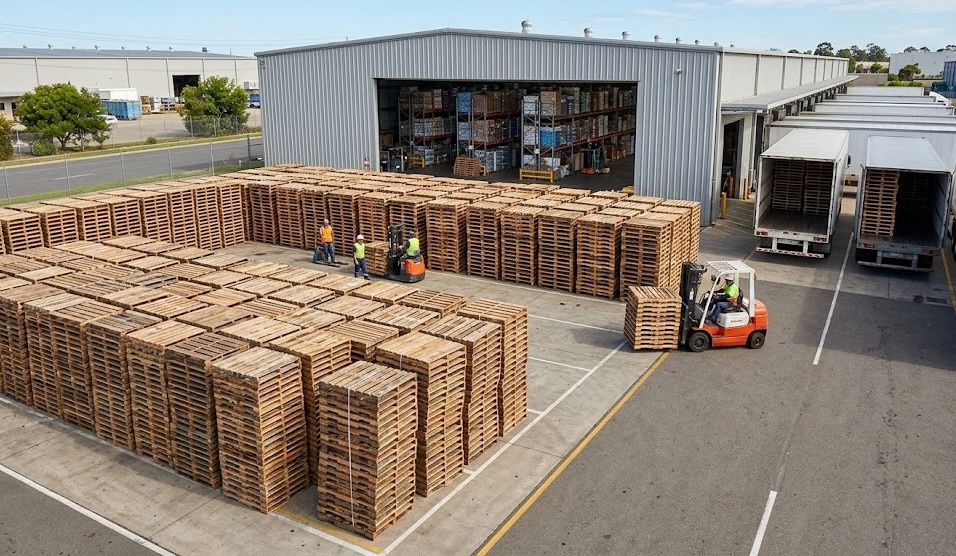
Fleet Staging & Loading Dock
Our 12-truck fleet staging area includes three dedicated loading docks with dock levelers and a paved marshalling yard large enough to stage next-day loads the evening before. Flatbeds and box trucks are loaded daily for Bay Area deliveries and pickups. A dispatch coordinator manages route optimization to maximize fuel efficiency and minimize empty miles. GPS tracking on every vehicle provides real-time delivery status to our operations team.
Custom Build Shop
A dedicated 2,500 sq ft area for custom pallet fabrication, equipped with a CNC panel saw, radial arm saws, a notching station, and assembly jigs for non-standard dimensions. Whether a client needs an oversized aerospace pallet, a lightweight display skid, or a heat-treated export crate, this is where it comes to life. Our build team can produce prototypes within 24 hours and scale to production runs of 500+ units per week.
Office & Showroom
Our front office houses sales, customer service, dispatching, and a sample showroom where clients can see and compare different pallet types and grades side by side. The showroom features cross-sections of repaired pallets, examples of heat treatment stamps, and specification sheets for every standard size we carry. Meeting rooms are available for logistics planning sessions with high-volume clients.
Lumber Storage & Drying Area
A covered 3,000 sq ft area dedicated to raw lumber storage. New boards and stringers are organized by species, dimension, and moisture content. Air-drying racks allow green lumber to season naturally before use, and a moisture meter station ensures that no material enters production above the acceptable threshold. Proper lumber management here is what keeps our repair line running without interruption.
Mulch & Byproduct Processing
Wood that cannot be reused in pallet repair is processed through our industrial chipper and converted into landscaping mulch, animal bedding, or biomass fuel feedstock. The chipper handles up to 10 tons of scrap wood per day. Finished mulch is stockpiled in a dedicated bay and sold in bulk to landscaping companies, municipalities, and garden centers throughout the East Bay.
Equipment Maintenance Bay
A fully equipped maintenance bay where our in-house mechanic performs preventive maintenance and repairs on forklifts, trucks, the chipper, kiln components, and pneumatic tools. Keeping maintenance on-site reduces downtime dramatically. The bay includes a parts inventory, welding station, hydraulic press, and diagnostic equipment. Scheduled maintenance intervals are tracked digitally to ensure nothing is missed.
Employee Break Area & Training Room
A comfortable, climate-controlled break area with seating for 30, a kitchenette, lockers, and restrooms. Adjacent to the break area is a training room used for new-hire orientation, weekly safety briefings, forklift certification courses, and OSHA compliance training. Investing in our team starts with giving them a clean, safe space to recharge during the workday.
Inside Our Operation
A look at our facility, team, and the work that goes into recycling thousands of pallets every week.
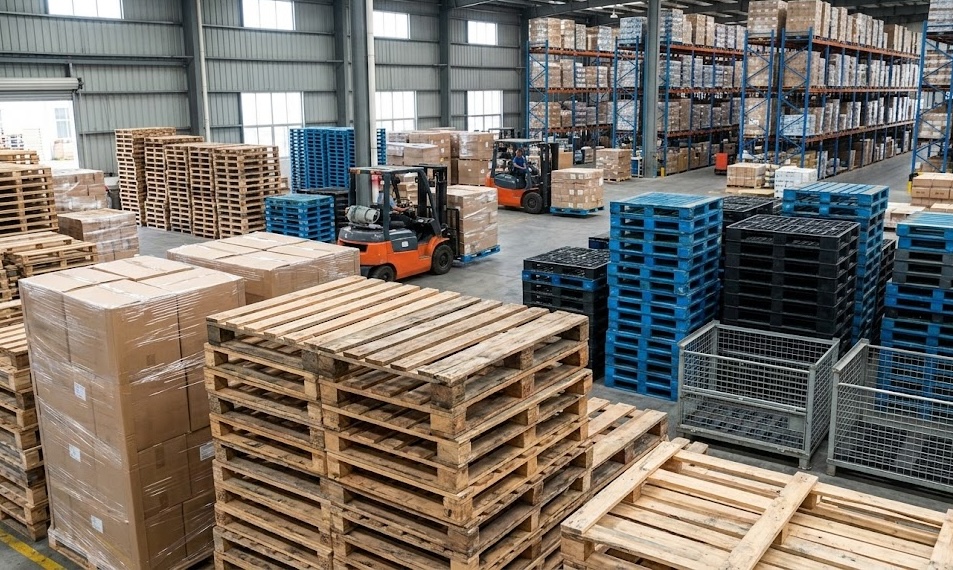
Sorting Yard — Incoming pallets staged for grading and inspection
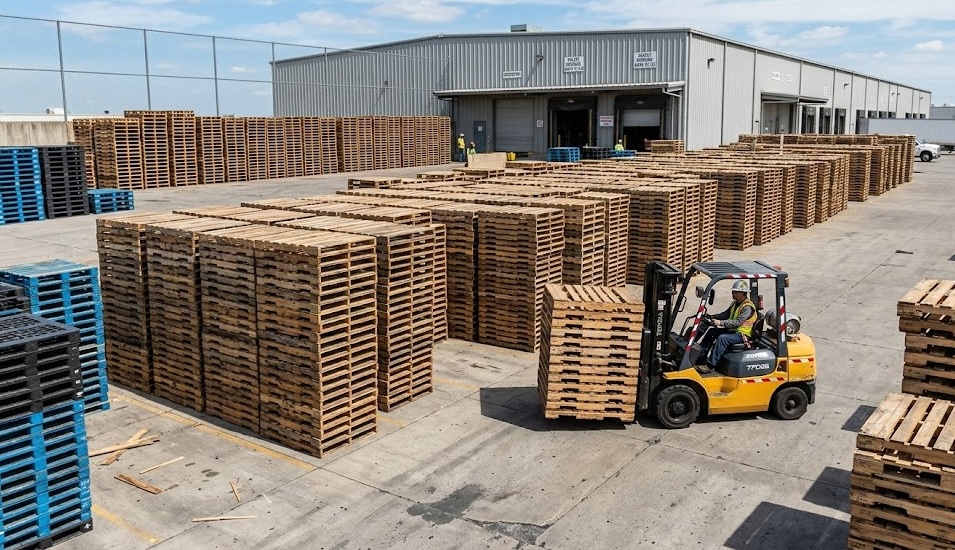
Repair Workshop — Technicians restoring pallets to grade specifications
Heat Treatment Kiln — ISPM-15 certified treatment in progress
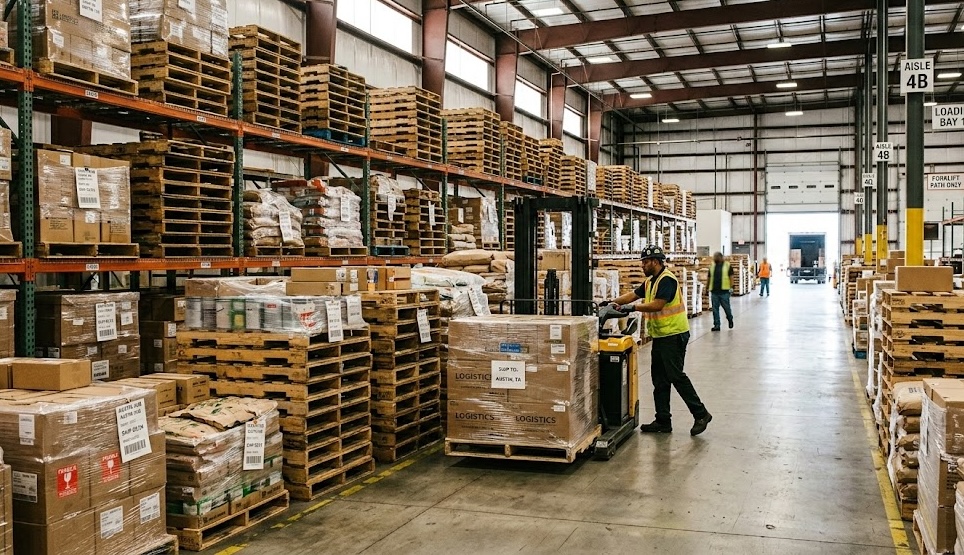
Quality Control — Every pallet inspected before entering sales inventory
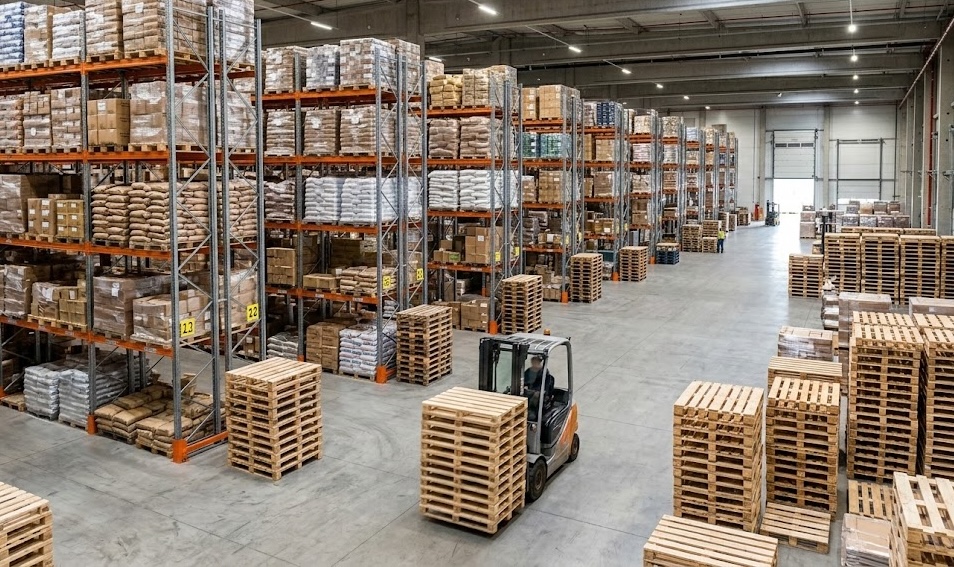
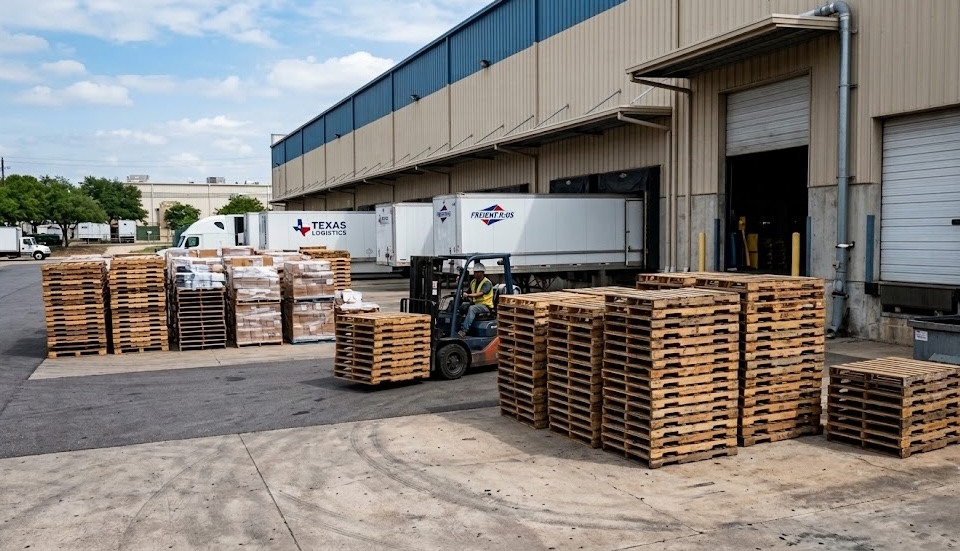
Fleet Staging — Trucks loaded and ready for Bay Area deliveries
Finished Inventory — Graded pallets stacked and ready to ship
Facility Specifications
A breakdown of our capacity, throughput, and infrastructure by the numbers. These figures represent current operational maximums based on single-shift operations unless otherwise noted.
Key Numbers
Equipment List
- Pneumatic nail guns (12 stations)
- Radial arm saws (3 units)
- CNC panel saw
- Hydraulic pallet dismantlers (2 units)
- Industrial wood chipper (horizontal feed)
- Gas-fired ISPM-15 heat treatment kiln
- Electronic kiln temperature monitoring system
- Forklifts — propane and electric (8 units)
- Gravity-fed roller conveyors
- Magnetic metal separator
- Moisture meters and grading instruments
- Air compressor system (centralized, 100+ PSI)
- Dock levelers (3 bays)
- GPS fleet tracking on all vehicles
- Welding station and hydraulic press (maintenance bay)
- Overhead yard lighting for extended operations
Virtual Tour Walkthrough
Walk through our facility from gate to gate. Here is what you would see on a typical weekday morning at Oakland Pallets.
Arriving at the Gate
You pull up to our G Street entrance just after 7:00 AM. The security gate is already open and the yard is humming. A flatbed truck loaded with retrieved pallets is backing into the receiving lane, and a forklift operator is staging outbound loads at dock two. The dispatch office window is lit, and the day's route sheets are already printed and clipped to the driver boards.
To your left is the main office building. Straight ahead is the sorting yard — a vast open space already filling up with pallets arriving from the morning pickups. The air carries the clean smell of fresh-cut pine mixed with the low rumble of diesel engines idling at the docks.
Through the Sorting Yard
Walking into the sorting yard, you see rows upon rows of pallets organized by size and condition. Yard associates work in pairs — one on the forklift, one on foot — moving stacks from the intake area to their designated lanes. The 48x40 GMA pallets go to lane one, oversized units to lane two, and damaged pallets to the repair queue in lane three.
Each pallet gets a quick visual inspection right here. Associates check for broken boards, missing blocks, protruding nails, and contamination. It takes an experienced sorter about three seconds per pallet. The fast ones can clear a trailer load in under an hour.
Inside the Repair Workshop
Stepping into the covered repair workshop, the sound changes immediately — the rhythmic crack of pneumatic nail guns echoes off the metal roof. Twelve repair bays line both sides of the building, each one occupied by a technician working through their assigned stack. Replacement boards are racked within arm's reach, pre-cut to the most common lengths.
A skilled technician can repair a standard pallet in about 90 seconds — pull the broken board, slide in the replacement, drive three nails, flip it, inspect, stack it on the outbound pile. The finished pallets are moved to the grading area or directly to inventory if they were minor repairs. Quality music plays from a speaker mounted on the wall, and the team works with a steady, practiced rhythm.
The Heat Treatment Kiln
Around the back of the repair shop, you reach the kiln — a large, insulated chamber that looks like an oversized shipping container. The current load is mid-cycle; you can feel the warmth radiating from the walls. A digital display on the control panel shows the internal temperature at 62 degrees Celsius and climbing.
The kiln operator explains the process: pallets are loaded on a track system, the doors are sealed, and the gas burners bring the chamber up to temperature. Probes embedded in test blocks confirm that the core of the wood reaches 56 degrees Celsius for at least 30 minutes — the ISPM-15 threshold. After treatment, each pallet receives a certified stamp, and the batch number is recorded in a digital log that ties back to our treatment certificate.
Loading Docks & Departure
At the front of the yard, the loading docks are a controlled chaos of activity. Dock one has a flatbed being loaded with 500 repaired 48x40 pallets headed to a warehouse in Fremont. Dock two is receiving a return load of broken pallets from a distributor in San Leandro. Dock three is being swept and prepped for an afternoon custom order shipment.
Drivers check their manifests against the physical count, secure loads with straps and edge protectors, and pull out onto G Street. By mid-morning, most of the fleet is on the road, and the yard settles into the steady hum of sorting, repairing, and restacking that will continue until the last truck returns in the late afternoon.
Safety & Compliance
A safe facility is a productive facility. We invest heavily in training, equipment, and procedures to protect our team and maintain full regulatory compliance.
OSHA Compliance
Our facility meets all applicable OSHA standards for general industry and material handling operations. We conduct formal safety audits quarterly and address any findings within 48 hours. Our injury rate is well below the industry average, and we maintain a detailed incident log that is reviewed monthly by management. Every employee receives a minimum of eight hours of safety training annually, in addition to role-specific instruction.
Forklift Safety Program
All forklift operators hold current OSHA-compliant certifications, renewed every three years with annual refresher evaluations. Operators complete a pre-shift inspection checklist on every piece of equipment before use. Speed limits are posted and enforced throughout the yard, designated pedestrian walkways are clearly marked, and backup alarms are maintained on every vehicle. New operators complete a 16-hour training program before being cleared for independent operation.
Fire Prevention & Suppression
Wood-handling facilities carry inherent fire risk, and we take it seriously. Fire extinguishers are stationed every 50 feet throughout the facility. The kiln area has a dedicated suppression system. Scrap wood and sawdust are cleared from all work areas at the end of every shift. We conduct fire drills twice per year, and the Oakland Fire Department has inspected and approved our facility annually since we opened. Smoking is prohibited everywhere on the premises.
Personal Protective Equipment
Steel-toed boots, safety glasses, and work gloves are mandatory for all yard and shop personnel. Hearing protection is required in the repair workshop and near the chipper. High-visibility vests are required in all vehicle traffic areas. PPE is provided at no cost to employees, and replacements are available same-day from our supply room. Supervisors conduct spot checks throughout the shift to ensure consistent compliance.
Environmental Controls
Stormwater runoff is managed through a filtration system that prevents wood debris and sediment from entering the storm drain. Our chipper operates within permitted noise and emission limits. We hold a current Bay Area Air Quality Management District permit for the kiln, and emissions are tested annually. Waste oil, hydraulic fluid, and other hazardous materials are stored in secondary containment and collected by a licensed disposal service on a regular schedule.
Weekly Safety Briefings
Every Monday morning begins with a 15-minute all-hands safety briefing. The shift supervisor reviews the previous week's near-miss reports, highlights a specific safety topic — such as proper lifting technique, heat illness prevention, or lockout/tagout procedures — and opens the floor for questions. These briefings are documented, and attendance is tracked. They are a non-negotiable part of our operating culture and one of the reasons our safety record is as strong as it is.
Visiting Us
We believe in transparency. Seeing our operation firsthand is the best way to understand the quality and care behind every pallet we sell. We welcome tours for prospective clients, current customers, community groups, and students.
Tour Details
- Tours are available Monday through Friday, 9:00 AM to 3:00 PM
- Standard tours last approximately 30 to 45 minutes
- All visitors receive a safety briefing and PPE (hard hat, vest, safety glasses) upon arrival
- Tours cover the sorting yard, repair workshop, kiln, custom build shop, and loading docks
- A sales or operations manager leads every tour and is available to answer questions throughout
- Photography is welcome — we encourage you to document what you see
How to Schedule
To schedule a tour, contact us through our website or email us directly. Please provide your preferred date and time, the number of visitors in your group, and a brief description of your interest (prospective client, educational visit, partnership discussion, etc.). We do our best to accommodate requests within one to two business days.
Groups larger than 10 people require at least one week of advance notice so we can arrange additional safety escorts and ensure the tour does not interfere with active production.
After your visit, we are happy to follow up with a formal quote, specification sheets, or any other documentation discussed during the tour.
What Visitors Say
Many of our long-term clients first became customers after touring the facility. Seeing the care and precision in our repair process, the organization of the yard, and the professionalism of the team tends to answer questions that a spec sheet alone cannot. Logistics managers consistently tell us that the tour gave them confidence to consolidate their pallet sourcing with Oakland Pallets.
We have also hosted groups from local vocational programs, community colleges, and environmental organizations interested in learning about pallet recycling as a career path and a sustainability practice. If you represent a school or nonprofit and would like to arrange a visit, we are happy to work with you on scheduling at no cost.
Come Visit Us
We offer facility tours for prospective clients and community groups. See how pallet recycling works up close and learn why Bay Area businesses trust Oakland Pallets with their supply chain.
Schedule a Tour